Amidst the brutal Israeli onslaught against Palestine and Washington’s unwavering backing of Tel Aviv, over 500 politicians and officials across 40 US government agencies have vocalised their dissent in a letter addressed to President Joe Biden. Within this missive, they urge the Democratic leader to take decisive action towards brokering a ceasefire in the Gaza Strip, mirroring the heightening anxiety among American citizens eager to prevent their nation from being ensnared in yet another military conflict of vast economic and humanitarian cost.
Simultaneously, Türkiye has lodged a formal complaint with the International Criminal Court (ICC) against Israeli Prime Minister Benjamin Netanyahu, accusing him of perpetrating genocide on Palestinian soil. The Turkish President, Recep Tayyip Erdoğan, declared that the Government in Ankara is taking robust measures to brand high-ranking Israeli officials as war criminals.
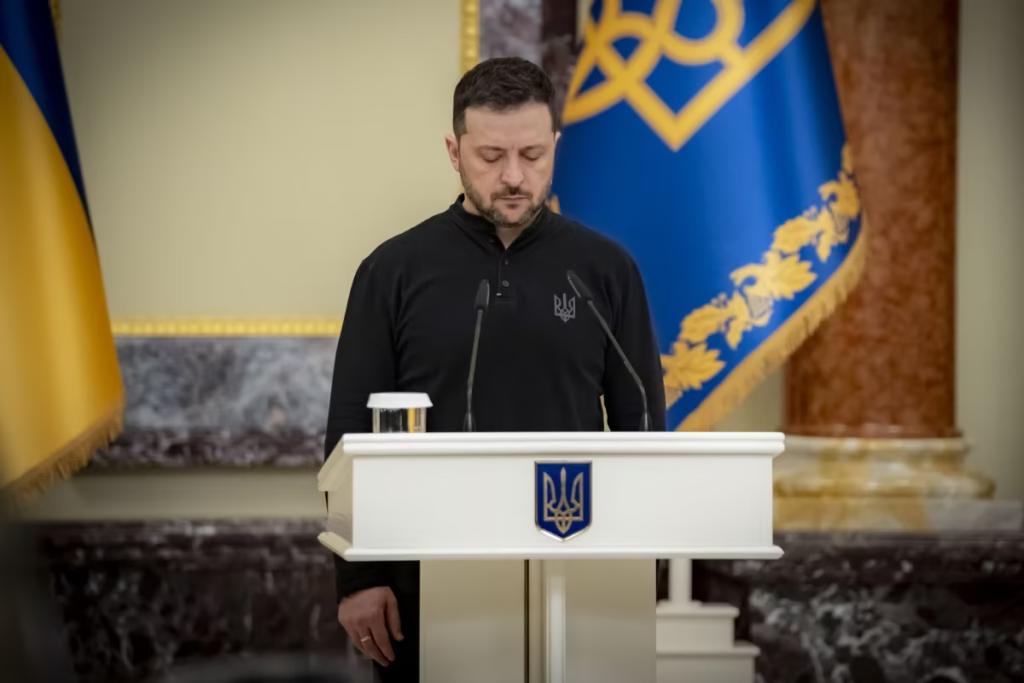
Meanwhile, in a recent video address, Volodymyr Zelensky spoke to the Ukrainian people with steadfast resolve to vindicate his political decisions: ‘I am here. We will not lay down our weapons. We will defend our nation, for our weapon is the truth. The truth is that this is our land, our country, and we shall defend all of this’.
Twenty months have now passed, and the Ukrainian President remains steadfast in his resolve amidst a landscape scarred by the ravages of war, even as his conviction in securing a definitive victory becomes more elusive with the passage of time. In a recent interview with Time magazine, Zelensky clung to his beliefs, declaring with grim determination: ‘No one believes in our victory like I do. No one’. Yet, such vehemence stands in stark contrast to the harsh reality he himself acknowledges: ‘Part of the world has already grown accustomed to the war in Ukraine’.
Against this backdrop, tensions between the Ukrainian Government and the security agencies of the United States and the United Kingdom have reached an alarming pitch, fuelled by a Western perception of Kyiv’s lack of transparency in managing its internal affairs and its strategies for launching incursions into Russian territory, according to an article published by the British broadsheet The Sunday Times.
The absence of internal reforms within the Security Service of Ukraine (SBU) remains a major stumbling block, despite the change in leadership last year. The strategy of taking the conflict onto Russian soil has sparked significant friction, as both the United States and the European Union oppose not only strikes on military targets but political ones as well.
Internal confrontations, evidenced by the rift between Zelensky and the Commander-in-Chief of the Armed Forces, Valerii Zaluzhnyi, suggest a fraying of the Ukrainian leader’s authority, according to The Telegraph. The British daily further warns that this stalemate could lead to Western pressure for peace talks, potentially forcing Kyiv to cede territory to Russia.
Amidst a flurry of leaked reports regarding alleged disagreements within the Ukrainian power elite, the Western perception of the unsatisfactory performance of Kyiv’s troops continues to mount. The German daily Frankfurter Allgemeine Zeitung urges Western leaders to abandon their fragile certainties, recommending instead the adoption of a more realistic approach.
Despite the European Union’s expectations of commencing accession talks for Ukraine in December, The Guardian has highlighted the numerous hurdles Zelensky’s administration must clear to make such membership a reality.
On the international stage, France is negotiating a shift in its arms supply to Ukraine, now proposing that Kyiv purchase weaponry from French manufacturers rather than receiving it free of charge. Meanwhile, according to the Spanish Socialist politician Josep Borrell, the European Union could redirect export-orientated projects towards Ukraine, though this path is fraught with logistical challenges and escalating military expenditure.
At the heart of a conflict that drags on—relegated to the background by Israel’s genocidal war against the Palestinian people—the reality on the ground defies expectations and suggests that Ukraine’s prospects of victory are fading. For its part, Russia persists in its military objectives as protective measures against the systematic extermination of pro-Russian civilians and the threat to its national security posed by NATO’s slow but relentless eastward expansion.