


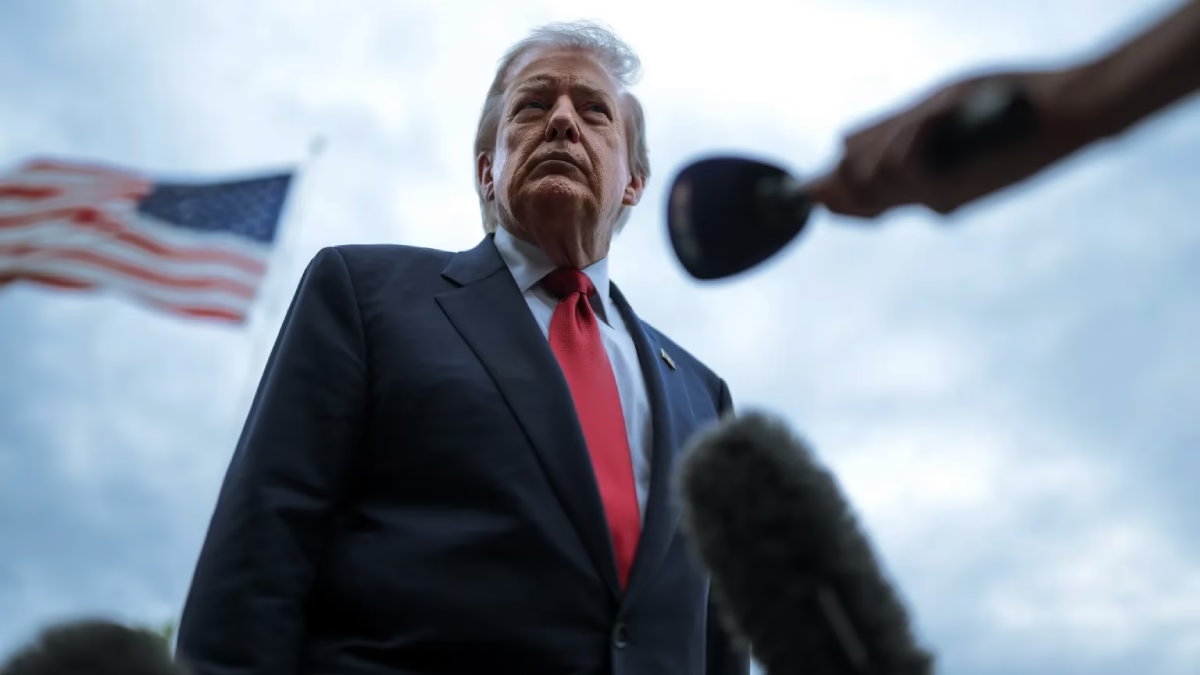
The American democratic experiment, once heralded as the pinnacle of constitutional rigour, has finally succumbed to a paradox of tectonic proportions. The trajectory of the 2024 electoral cycle demonstrated that the United States’ constitutional framework, anchored in the archaic premise of civic virtue, has devolved into a mechanism of absolute systemic immunity. Donald Trump, having already left an indelible mark with his 2016 triumph, achieved this once more by defeating the Democratic nominee, Kamala Harris. His return to the White House, underpinned by populist diatribes and the ‘America First’ doctrine, not only resonated across the nation but solidified a model of governance defined by the subordination of justice to the personal interests of the New York magnate.
The most ominous peril revealed by this cycle is not the victory of any specific candidate, but the mutation of the right to stand for office into an absolute safe conduct for criminality. The system has devolved into a construct of rapid absolution where any criminal record—ranging from systematic fraud to capital offences—is instantly dissolved beneath the mantle of candidacy and the subsequent exercise of office. We find ourselves in an era wherein an individual currently under indictment may ascend to the status of ‘untouchable’ simply through the medium of the ballot box. The ballot has been transformed, de facto, into the supreme tribunal of exoneration, where popular sovereignty acts as an ex post facto amnesty, purging any prior criminal liability through the act of investiture.
The fundamental crisis resided in this inversion of legal hierarchy. Trump utilised his tenure as a candidate (2023–2024) to orchestrate a methodical cleansing of his judicial record. Among the most notorious offences was the mishandling of classified documentation at Mar-a-Lago; a case which, following judicial dismissal in 2024 and the subsequent withdrawal of the Department of Justice, was concluded via a settlement agreement that guaranteed total impunity. Simultaneously, the conservative politician neutralised conspiracy charges concerning the attempt to invalidate the 2020 election results, thereby consolidating control over the mechanisms of oversight.
In the case of Fulton County, the technical reality proved revelatory. That process, directed by District Attorney Fani Willis, possessed a characteristic singularly perilous for Trump: his immunity from presidential pardon powers. Yet, the history of this case was a chronicle of gradual technical asphyxiation. Following successive disqualification manoeuvres and an orchestrated bureaucratic paralysis, the prosecution was compelled to desist from the case in November 2025, sealing the demonstration that impunity is not decreed, but rather cultivated. To this was added the scandal involving the payment to Stormy Daniels, an attempt to influence the 2016 campaign which was finally archived due to procedural obsolescence once executive power had been attained.
Following the electoral conquest of 6 November 2024, the sanitisation strategy permeated the federal penal administration. Since 2025, the government has consolidated a state apparatus oriented towards the expeditious application of capital punishment, a tool Trump has deemed essential. Through the rescission of the 2021 moratorium and the implementation of accelerated execution protocols, historical safeguards have been suppressed. By June 2026, the most aggressive measures—such as the prohibition against death-row inmates filing clemency petitions and the ‘rationalisation’ of habeas corpus review—have converted the penal system into machinery that prioritises the implementation of the sentence over procedural justice.
The question looming over the political horizon is what shall remain of the judicial apparatus once the mandate expires. There is a technical certainty that, by the time Trump vacates the Oval Office, the original causes will have been devoured by temporal erosion or institutional dismantling. The ‘cleansing’ has not been a mere dismissal, but an annulment through obsolescence. When the protection of presidential immunity dissipates, the judiciary will not confront criminals to be judged, but rather an exanimate legal body, incapable of articulating charges against the man who has rewritten, over four years, the very nature of legality. Impunity, therefore, is not a transitory state, but the final sediment of an administration that has transformed justice into an ornamental artefact, leaving for posterity an irreversible precedent: crime, if executed with sufficient political ambition, no longer requires pardon, for it has ceased to be recognised as such by the State itself.




No Comments Yet