


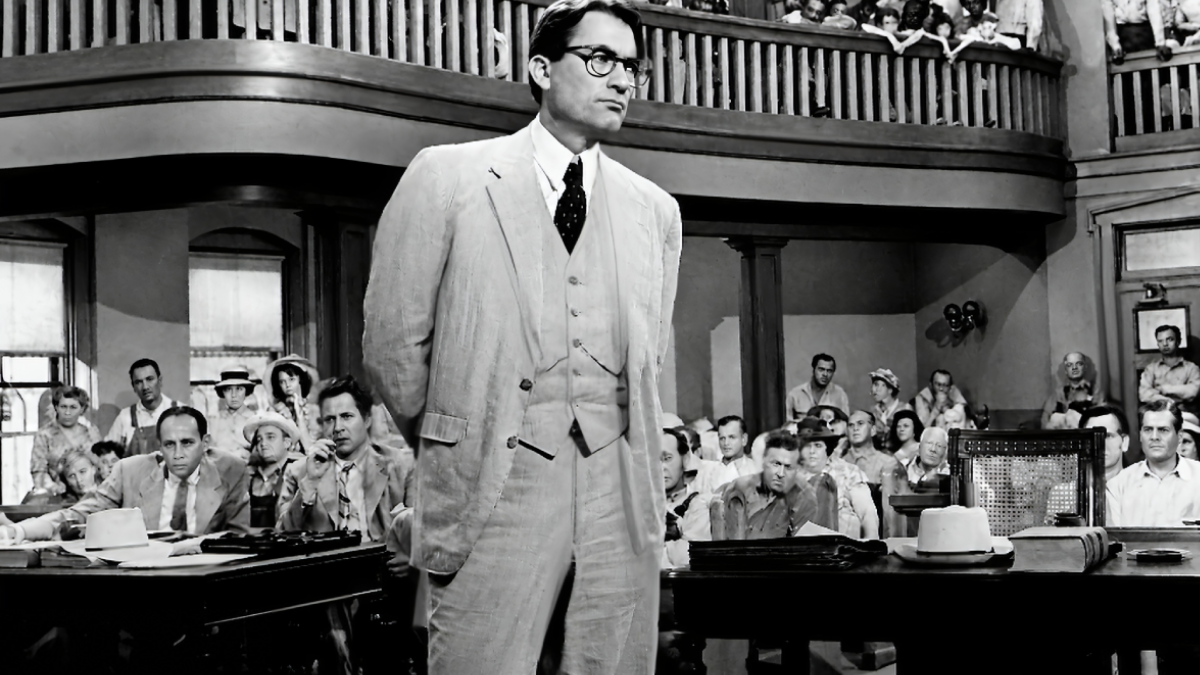
In a turbulent world, where integrity all too often appears to founder upon the murky seas of contemporary society, a new cultural storm front has been buffeting the very pillars of education for several years. The Duluth school district, in the state of Minnesota, decreed the removal of two irreplaceable cornerstones of American literature from its mandatory reading lists: To Kill a Mockingbird and The Adventures of Huckleberry Finn. The institutional rationale contended that both texts contain racial language and depictions capable of wounding sensibilities or humiliating students. Far from being an isolated incident, this phenomenon of censorship and revisionism had already left its mark on schools across Virginia, Mississippi, and Pennsylvania, sparking a global debate on how a misguided desire for protection may ultimately impoverish the intellectual heritage of younger generations.
‘You might hear some ugly talk about it at school, but do one thing for me if you will: you just hold your head high and keep those fists down. No matter what anybody says to you, don’t let ‘em get your goat. Try fighting with your head for a change… it’s a good one, even if it does resist learning.’
This lesson in dignity, articulated by the unforgettable Atticus Finch, resonates today with unprecedented force. On 12 June 2003, Atticus left us orphaned: the celebrated Californian actor Gregory Peck passed away at his Los Angeles residence at the age of eighty-seven. Since then, an all too often hurried and resentful world has seemingly accelerated its transformation into an increasingly turbulent arena. Amidst this hostile landscape, Harper Lee’s imperecederas pages endure as an ethical and spiritual sanctuary throughout the gale; a space wherein we may reconcile ourselves to the loss of innocence, safe in the knowledge that Boo Radley will eternally remain our silent guardian angel.
Gregory Peck frequently confessed that his portrayal of the Southern lawyer in the cinematic adaptation of To Kill a Mockingbird (Robert Mulligan, 1962) was not merely the pinnacle of his career, but also his personal favourite. That role crystallised his own philosophy of life, one defined by an innate elegance and a profound commitment to social justice.
Following a brilliant and refined theatrical career on Broadway, with appearances in productions such as The Morning Star and The Willow and I, Peck made his screen debut in the wartime drama Days of Glory (Jacques Tourneur, 1944). It was, however, his second feature film, The Keys of the Kingdom (John M. Stahl, 1944), that propelled him to superstardom, earning him his first Academy Award nomination. Thenceforth, his commanding physical presence and magnetic voice established him as an enduring icon of Hollywood’s Golden Age.
Throughout the 1950s, he demonstrated an extraordinary versatility that defied any attempt at typecasting him as the perennial noble hero. He captivated audiences in swashbuckling cinema with The World in His Arms (Raoul Walsh, 1952), reinvented romantic comedy alongside a rising Audrey Hepburn in the exquisite Roman Holiday (William Wyler, 1953), and delved into the psychology of human torment by portraying the obsessive and reckless Captain Ahab in Moby Dick (John Huston, 1956).
The 1960s consolidated his artistic maturity with darker titles such as Cape Fear (J. Lee Thompson, 1962) and, definitively, with the aforementioned To Kill a Mockingbird. His memorable portrayal of Atticus Finch—the lawyer who defends Tom Robinson, a Black man falsely accused of rape in the deeply racist Deep South of the 1930s, with immutable integrity—earned him the Academy Award for Best Actor, cementing the character as the greatest screen hero in cinematic history according to the American Film Institute.
Throughout his fifty-year career, Peck worked under the stewardship of master directors of the calibre of Alfred Hitchcock and King Vidor, and shared the screen with such legends as Robert Mitchum, David Niven, Anthony Quinn, and James Stewart. Towards the late 1980s, he gradually stepped back from the silver screen to focus his efforts on prestigious television projects and, most notably, on his philanthropic endeavours, actively supporting a diverse range of humanitarian and artistic organisations. He was, above all, a gentleman both on and off the screen—a humanist profoundly concerned with the enduring significance and moral weight of his decisions.
Interest in this literary universe was powerfully revived on 14 July 2015 with the publication of the novel Go Set a Watchman. Although initially marketed as a sequel to To Kill a Mockingbird, the text in fact constituted the first draft of Harper Lee’s masterpiece. That seminal novel, originally published in 1960 and awarded the Pulitzer Prize, remains an indispensable beacon today—a poignant reminder that true culture does not consist in evading the conflicts of the past, but rather in teaching us to overcome them through the virtues of reason, empathy, and justice.






No Comments Yet